Travel Insurance from the UK enrures the best tour to your dream destination.
Wishing you the best tour to your dream destination. But keep a backup plan which gives you financial security. ATOL protected travel agencies provide the financial security to your flights. Even though, you need the Travel Insurance to cope with the unexpected situations such as lost baggage, medical emergencies, trip cancellations, or any type of travel disruptions. Travelers should buy the Travel insurance UK as soon as you book your tour package.
Travel insurance is booked before starting your journey to the dream destination via Cheap Holiday Packages from UK. Travel Insurance for the UK Travelers is not legally mandatory but most recommended by the travel experts. Some of the tour operators require Travel insurance. Travel Insurance should be your first priority either you are booking a Beach Holidays Packages or Adventurous Trips from London, Birmingham, Edinburgh, Liverpool, or Manchester.
Protect your dream journey from the expensive nightmares by purchasing Travel Insurance before booking the tour package!
What is Travel Insurance in the UK?
Travel Insurance is protection, safety, and financial security which you can claim in the unexpected situations. It is a short-term policy which covers the mishaps such as medical emergencies, lost baggage, and unexpected delays from the airline side. Here are some of the important coverages of the Travel Insurance from UK:
· Medical Emergencies: It includes the medical emergencies such as unexpected hospital stays, doctor visits, and medications during your trip. Note that it doesn’t include the pre-existing medical conditions until unless declared in policy.
· Medical Evacuation: Travel Insurance company is liable to pay the transport expenses and all facility expenses for the medical evacuation.
· Trip Cancellations / Interruptions: Helps out in the conditions in which reservation is cancelled by hotel or airline even on non-refundable tickets. If you’ve cancelled your trip due to serious illness, injuries, or bad weather conditions, even then you can claim insurance amount.
· Baggage and Personal Belongings: Insurance Policy compensates the lost or stolen baggage and personal items during your voyage.
· Tavel Delays: Travelers can claim the extra charges of rescheduled flights, accommodations, and extra amenities in the delayed flights.
Above mentioned conditions can be happened with us during the travel to our dream destination. To protect your journey with any kind of mishaps, you should purchase the travel insurance policy before your began your journey.
Why Travel Insurance Is Important for UK Travellers
Travel insurance can protect you from unexpected costs when you travel abroad. A cancelled flight, lost luggage, medical emergency or having to cut a trip short can quickly turn into a large expense without suitable cover.
For UK travellers, travel insurance is particularly important for medical costs abroad. The NHS does not generally cover planned healthcare overseas, and a European Health Insurance Card (EHIC) or Global Health Insurance Card (GHIC) does not replace travel insurance. These cards can provide access to medically necessary state healthcare in certain European countries under the relevant arrangements, but they do not cover everything.
A good travel insurance policy may cover:
· Emergency medical treatment and hospital costs
· Repatriation to the UK when medically necessary
· Cancellation or cutting your trip short for covered reasons
· Lost, stolen or damaged baggage
· Travel delays and missed departures, depending on the policy
· Personal liability
· Certain activities and sports, if included in the cover
The level of protection varies between policies, so it is important to read the policy wording and exclusions before buying. For example, some insurers may not cover pre-existing medical conditions unless they have been declared and accepted, while certain sports or activities may require additional cover.
Travel insurance is not only about getting money back for a cancelled holiday. Its biggest value can come when something goes seriously wrong overseas, particularly when medical treatment or emergency transport is involved.
Before travelling, check that your policy covers your destination, the full length of your trip and the activities you plan to do. It is also worth buying insurance soon after booking your holiday, as some policies can provide cancellation protection from the start of the policy.
What Types of Travel Insurance Are Available in the UK?
UK travellers can choose from several types of travel insurance, depending on how often they travel, who is travelling and the level of protection they need. The three common options are single trip, annual multi-trip and family travel insurance.
Choosing the right type can help you avoid paying for cover you do not need while making sure you are protected against the risks that matter during your trip.
What Is Single Trip Travel Insurance?
Single trip travel insurance covers one specific holiday or journey. You choose your departure and return dates when buying the policy, and the cover normally ends when the trip finishes.
It can be a practical option if you only travel abroad once or twice a year and do not expect to take several trips within the policy period.
A single trip policy may cover:
· Emergency medical treatment
· Cancellation or cutting your trip short
· Lost, stolen or damaged baggage
· Travel delays
· Personal liability
· Emergency repatriation, where covered
The exact protection depends on the insurer and policy. Check the destination, maximum trip length, activities and exclusions before purchasing.
For a longer or more expensive holiday, pay particular attention to the medical expenses and cancellation limits rather than choosing a policy based only on price.
What Is Annual Multi-Trip Travel Insurance?
Annual multi-trip travel insurance, sometimes called annual travel insurance, provides cover for multiple trips during a 12-month policy period.
It can be useful for people who travel several times a year for holidays, visiting family, business or short breaks. Instead of buying separate insurance for every journey, you have one annual policy covering eligible trips throughout the year.
However, an annual policy does not usually mean you can stay abroad for the entire year. Insurers often set a maximum number of consecutive days for each trip. The limit can vary depending on the policy and may differ for certain destinations or travellers.
Before buying annual cover, check:
· The maximum length of each trip
· Which countries or regions are covered
· Whether winter sports are included
· Whether business travel is covered
· Cancellation and medical limits
· Any age restrictions
· Conditions relating to pre-existing medical conditions
If you take several trips each year, compare the total cost of separate single-trip policies with an annual policy. Annual cover is not automatically cheaper, so the number and length of your planned trips matter.
What Is Family Travel Insurance?
Family travel insurance is designed to cover several members of a family under one policy. Depending on the insurer, this can be more convenient than purchasing separate policies for every traveller.
A family policy may cover parents or guardians and their children, although the definition of a family varies between insurers. Always check who is eligible before purchasing.
Family cover can provide protection for the same broad risks as other travel insurance policies, including emergency medical treatment, cancellation, baggage problems and repatriation where included.
Parents should pay particular attention to the policy's medical cover, cancellation conditions and rules for children travelling with or without an adult. Some policies may also offer additional benefits for families, but these vary between providers.
The cheapest family policy is not necessarily the best choice. Check the cover limits, excesses, exclusions and whether every family member has the protection they need. If one traveller has a pre-existing medical condition, declare it to the insurer and confirm that it is covered before travelling.
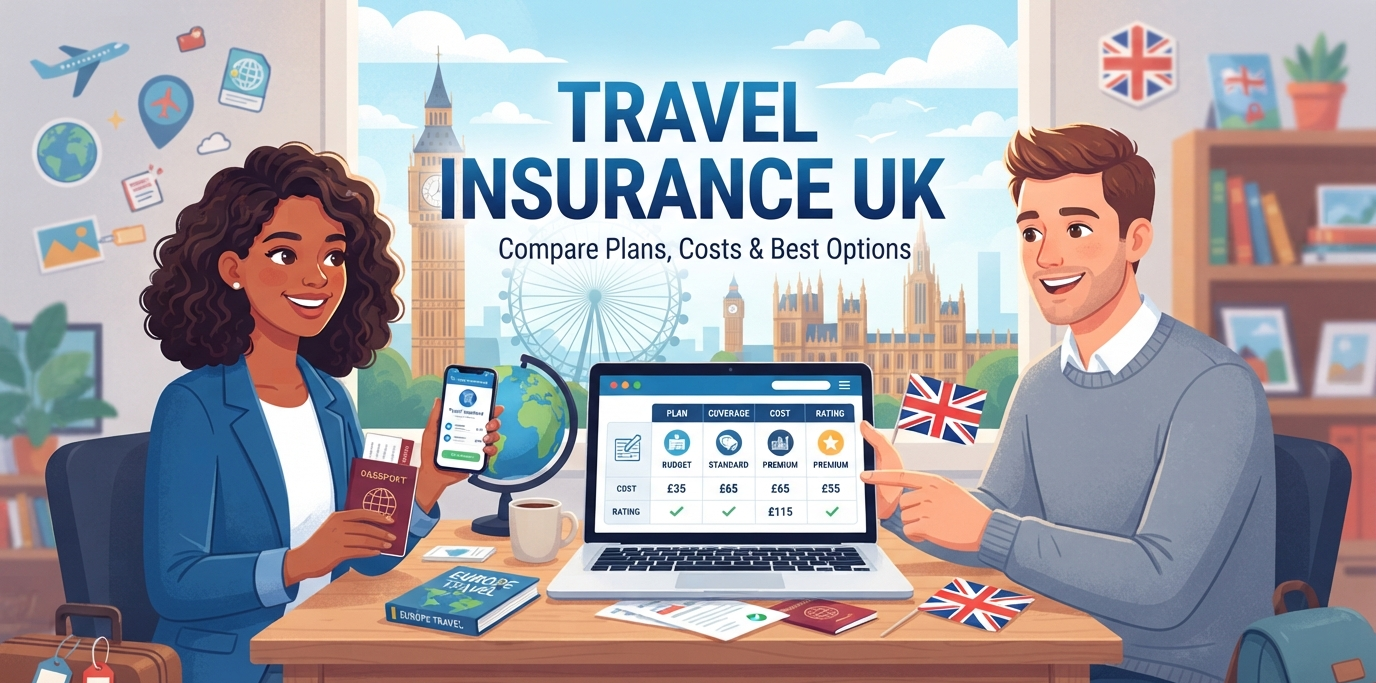
How Much Does Travel Insurance Cost in the UK?
The cost of travel insurance in the UK depends on several factors, so there is no single price that applies to every traveller. Your destination, age, trip length, number of travellers and the level of cover you choose can all affect the premium.
For example, a short European break for a young, healthy traveller is likely to cost less than a longer worldwide trip for an older traveller. Cover can also become more expensive if you add winter sports, cruise cover or other optional benefits.
Your medical history can also affect the price. If you have a pre-existing medical condition, you should declare it when obtaining a quote. Failing to disclose relevant medical information could affect a future claim.
When comparing prices, look beyond the cheapest premium. Check the:
· Emergency medical expenses limit
· Cancellation and curtailment cover
· Baggage cover
· Excess you would have to pay towards a claim
· Personal liability cover
· Exclusions and restrictions
· Maximum trip duration
· Optional activities included
A policy that costs a few pounds more may provide significantly stronger protection. The aim should be to find good-value travel insurance, rather than simply the cheapest policy available.
Which Are the Best Travel Insurance Providers in the UK?
There is no single travel insurer that is best for everyone. The most suitable provider depends on your destination, age, medical circumstances, planned activities and the level of cover you need.
When comparing travel insurance providers in the UK, look at the policy rather than relying solely on the insurer's brand name or price. A useful comparison should consider the cover limits, exclusions, excess, claims process and financial protection.
Well-known providers and comparison services available to UK consumers include Aviva, Staysure, Post Office, Direct Line and Compare the Market. However, availability, prices and policy terms can change, so check the current policy documents before buying.
What Should You Check Before Choosing an Insurer?
Before purchasing a policy, consider:
· Medical cover: Check that emergency treatment and medically necessary repatriation are adequately covered.
· Cancellation cover: Make sure the limit is high enough to cover your non-refundable holiday costs.
· Baggage protection: Check individual-item limits as well as the total baggage limit.
· Excess: Understand how much you would have to pay towards a successful claim.
· Destination: Confirm that every country you plan to visit is covered.
· Activities: Check whether skiing, scuba diving, cruises or other activities require additional cover.
· Medical conditions: Declare relevant pre-existing conditions and confirm that they are accepted.
· Policy exclusions: Read the exclusions before buying rather than discovering them when making a claim.
Comparison websites can make it easier to compare multiple policies, but they should be used as a starting point. Always read the insurer's policy wording before making your final decision.
How Does Travel Insurance for Europe Compare With Worldwide Coverage?
The main difference between European and worldwide travel insurance is the geographical area covered by the policy.
European travel insurance is generally designed for trips within the insurer's defined European region. Worldwide cover extends to destinations outside that region, although insurers can divide worldwide policies into different categories, such as worldwide cover including or excluding the USA, Canada, Mexico and the Caribbean.
This distinction matters because medical treatment in countries such as the United States can be extremely expensive. A worldwide policy may therefore cost more than European cover because insurers are taking on different levels of potential risk.
Having a GHIC or EHIC can also be useful when travelling in eligible European countries, but it should not be treated as a replacement for travel insurance. These cards provide access to state healthcare under the relevant arrangements but do not provide the wider protection offered by travel insurance, such as cancellation, baggage or repatriation cover.
Which Cover Do You Need?
European cover may be suitable if:
· You are only travelling within the policy's European area.
· Your holiday does not include destinations outside that region.
· You want to avoid paying for worldwide cover you do not need.
Worldwide cover may be more appropriate if:
· You are travelling to North America, Asia, Africa or other destinations outside the insurer's European region.
· Your itinerary includes several continents.
· You expect to take multiple international trips during the policy period.
Always check the insurer's definition of Europe and worldwide before buying. Geographical definitions can differ between providers, and some countries or territories may be treated differently.
If your holiday includes multiple destinations, enter the complete itinerary when getting a quote. Choosing the wrong geographical area simply to obtain a cheaper premium could leave you without valid cover for part of your trip.
What Does Travel Insurance Cover?
Travel insurance is designed to protect you against certain unexpected costs before and during your trip. The exact cover varies between insurers, so always read the policy wording and exclusions before buying.
A comprehensive policy may cover:
· Emergency medical treatment: Help with eligible medical and hospital costs while abroad.
· Emergency repatriation: Transport back to the UK when medically necessary and covered by the policy.
· Cancellation: Reimbursement for certain non-refundable travel costs if you have to cancel for a covered reason.
· Curtailment: Cover if you need to cut your trip short because of a covered event.
· Lost or stolen baggage: Compensation subject to the policy's limits and conditions.
· Travel delays: Some policies provide compensation when your journey is significantly delayed.
· Personal liability: Protection if you become legally liable for injury to another person or damage to their property.
· Missed departure: Some policies provide cover for certain situations that cause you to miss your booked transport.
Not every policy includes all these benefits, and limits can vary significantly. Some activities, destinations and medical conditions may also require additional cover.
Before purchasing, check the maximum claim limits, excess, exclusions and conditions. For example, baggage cover may have a separate limit for individual items, while cancellation cover may be limited to a particular amount per traveller.
What Are the Common Mistakes When Buying Travel Insurance?
Buying travel insurance based only on price can leave you with inadequate protection. A policy that appears cheap may have low cover limits, a high excess or exclusions that matter for your particular holiday.
One common mistake is failing to declare a relevant pre-existing medical condition. You should provide accurate information when asked by the insurer and check that any accepted conditions are covered by the policy.
Other mistakes include:
· Choosing European cover when your trip requires worldwide cover.
· Buying cancellation cover that is too low for the value of your holiday.
· Ignoring the policy excess.
· Assuming a GHIC or EHIC replaces travel insurance.
· Failing to check whether planned activities are covered.
· Assuming baggage cover applies to expensive items without checking individual limits.
· Waiting until the last minute to buy a policy.
· Not reading the exclusions and conditions.
· Assuming an annual policy covers unlimited-length trips.
· Giving inaccurate information when obtaining a quote.
Another mistake is assuming that every situation described as an emergency will automatically be covered. Insurance policies contain specific conditions, exclusions and definitions.
Take a few minutes to read the Insurance Product Information Document (IPID) and key policy terms before buying. If you are unsure whether something important is covered, ask the insurer for clarification and keep a record of the answer.
How Can You Get Cheap Travel Insurance in the UK?
The cheapest travel insurance is not necessarily the best value. The aim should be to find a policy that provides suitable protection at a reasonable price.
One of the easiest ways to reduce the cost is to compare several quotes. Prices can vary between insurers even when the basic level of cover appears similar.
You can also consider the following:
· Buy cover early rather than waiting until your departure date.
· Compare single-trip and annual policies if you travel several times a year.
· Choose the correct geographical area instead of paying for worldwide cover unnecessarily.
· Avoid optional extras you genuinely do not need.
· Compare the excess as well as the premium.
· Check whether existing insurance policies already provide some relevant benefits.
· Make sure you provide accurate information so the policy is suitable for your circumstances.
Increasing the excess can sometimes reduce the premium, but only choose an excess you could comfortably afford if you needed to make a claim.
If you travel frequently, an annual multi-trip policy may provide better value than buying separate policies for every journey. However, compare the actual prices and check the maximum length of each covered trip before deciding.
Most importantly, do not remove essential protection simply to reduce the price. Strong medical and cancellation cover can be far more valuable than saving a small amount on the premium.
A sensible approach is to compare price, cover limits, exclusions and excess together. That gives you a better chance of finding affordable travel insurance without sacrificing the protection you may need.
Conclusion
Choosing the right travel insurance in the UK is about finding a balance between price and protection. Compare policies carefully, check medical and cancellation cover, understand exclusions and make sure your destination and planned activities are included. A few extra minutes spent checking the policy before travelling can help protect you from significant and unexpected costs if something goes wrong.